Patient Guide · Chennai
Robotic vs Open Cancer Surgery: What Actually Matters
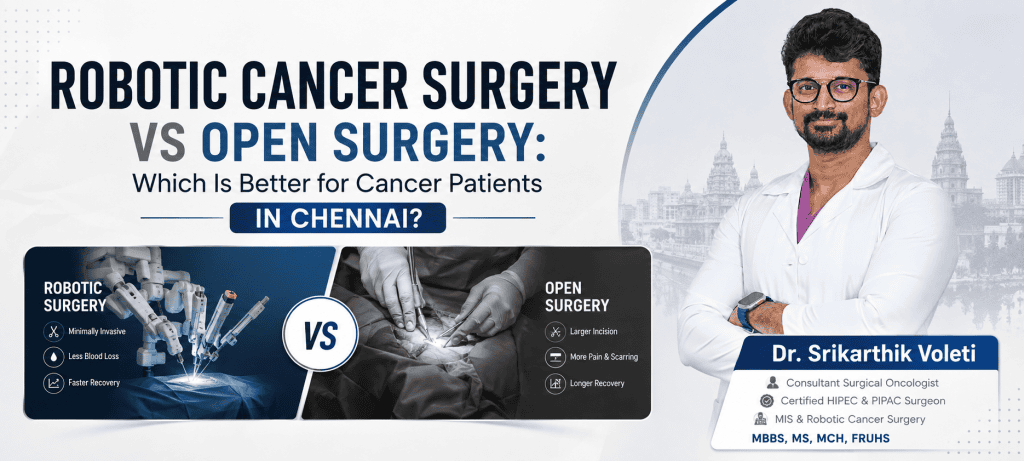
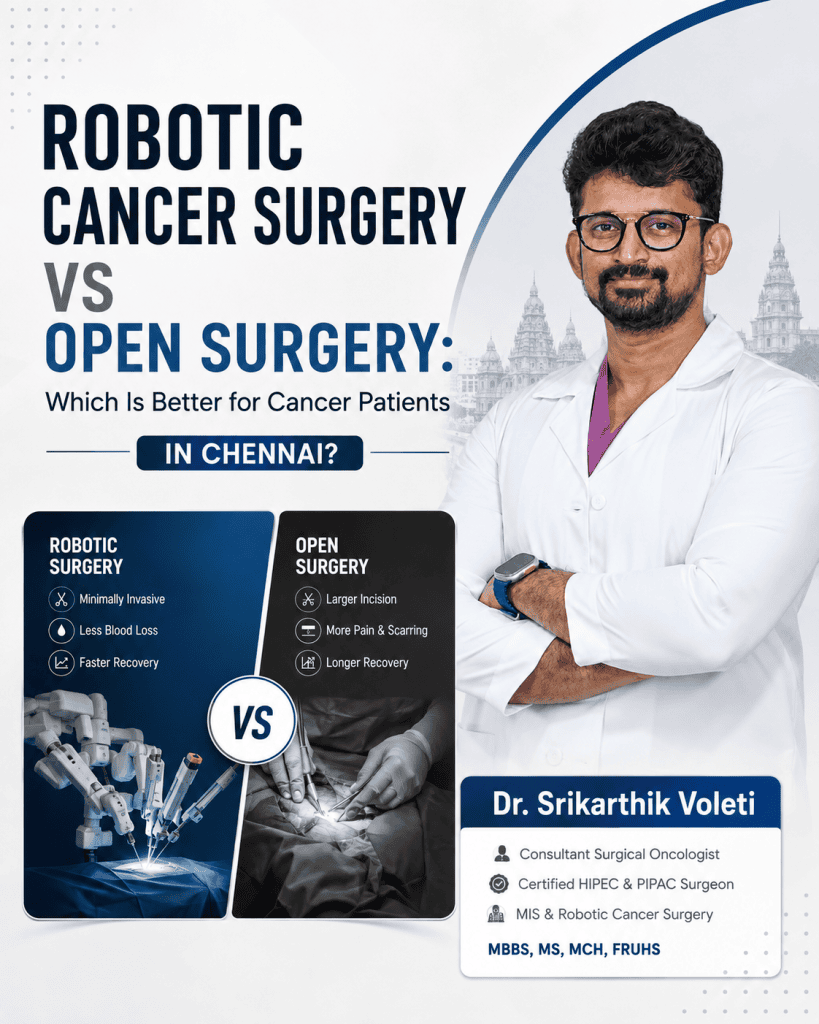
If you've been searching for the best robotic cancer surgeon in Chennai, you've probably run into a bigger question first — is robotic surgery even the right choice for your cancer? Here's how to think about it.
What Is Robotic Cancer Surgery?
Robotic-assisted surgery is a minimally invasive surgical technique in which the surgeon controls specialised instruments through a robotic platform. The robot does not operate on its own — the surgeon remains in control at every step, guiding every movement from a console.
What Modern Robotic Systems Offer
- High-definition visualisation
- Magnified three-dimensional views
- Articulating instruments that move like a wrist
- Precise, tremor-free control
- Improved access to difficult anatomical areas
Robotic systems are increasingly used in cancer surgery, including colorectal, urological, thoracic and other procedures, and Chennai has seen continued expansion of robotic surgical programmes in recent years.
What Is Open Cancer Surgery?
Open surgery involves a larger incision that gives the surgeon direct access to the tumour and surrounding structures. It remains an important, and sometimes necessary, approach.
Some large, complex or locally advanced cancers may require open surgery simply because the tumour cannot be safely removed through minimally invasive techniques.
Is Robotic Surgery Always Better?
No.
The goal of cancer surgery is safe and complete cancer treatment — not simply using the newest technology. A robotic approach may be right for one patient, while open surgery may be the more appropriate choice for another.
Potential Advantages of Robotic Surgery
Depending on the procedure and the patient, minimally invasive robotic surgery may offer:
- Smaller incisions
- Less postoperative discomfort in some cases
- Reduced blood loss in some procedures
- Earlier mobilisation
- Shorter hospitalisation in selected cases
- Faster return to normal activities in appropriate patients
Outcomes vary by procedure and patient — none of these benefits are guaranteed for every case.
Does Robotic Surgery Remove Cancer Better?
The robotic platform itself does not guarantee better cancer outcomes. What matters is whether the surgeon can perform an appropriate oncological operation, including adequate tumour removal and lymph-node clearance where required.
For rectal cancer, for example, the surgical approach must be based on tumour location, stage and sound oncological principles — not on the technology used to access it.
Which Cancers Can Be Treated Robotically?
Depending on expertise and patient selection, robotic surgery may be used for selected:
- Rectal cancers
- Colon cancers
- Gastric cancers
- Urological cancers
- Thoracic cancers
- Gynaecological cancers
- Other complex tumours
Not every tumour is suitable for robotic surgery.
Robotic vs Laparoscopic Cancer Surgery
Both are minimally invasive approaches. In laparoscopic surgery, the surgeon controls long instruments directly through small incisions. In robotic surgery, the surgeon operates through a console controlling specialised, wristed instruments. Both can be effective when used appropriately for the right patient and procedure.
How Do I Choose a Robotic Cancer Surgeon in Chennai?
Patients should look beyond the word "robotic."
Questions Worth Asking
- How frequently does the surgeon perform this specific cancer operation?
- Is the surgery appropriate for my cancer stage?
- What are the alternatives?
- What is the expected recovery?
- What are the risks?
- Will the procedure require chemotherapy or radiation before or after surgery?
- What happens if minimally invasive surgery cannot safely complete the operation?
Does Robotic Cancer Surgery Cost More?
It can, but cost varies according to several factors:
- Cancer type
- Hospital
- Robotic platform used
- Procedure complexity
- Length of hospitalisation
- Consumables
- Additional treatment required
Patients should request a procedure-specific estimate rather than relying on a generic figure found online.
Frequently Asked Questions
Robotic surgery can be safely performed in appropriately selected patients by trained surgical teams.
Not universally. The best approach depends on the cancer type, stage and the individual patient.
Minimally invasive surgery may reduce postoperative discomfort for some patients, but pain still varies depending on the operation performed.
In selected situations, surgery may have a role, but whether robotic surgery is appropriate depends on the distribution and resectability of the disease.
Conclusion
If you're comparing robotic cancer surgery vs open surgery in Chennai, don't choose the technique first — choose the right cancer treatment plan first.
The surgical approach should be selected based on the tumour, its stage, the surrounding anatomy, the patient's overall health, and the surgeon's ability to achieve safe and complete cancer removal.
Not sure which approach is right for your case?
Get a procedure-specific opinion before deciding between robotic and open surgery.
Book a Consultation