

Appendiceal Cancer Treatment in Chennai: Surgery, HIPEC & Pseudomyxoma Peritonei
Appendiceal cancer treatment in Chennai depends on the type of tumour, its grade, whether the appendix has ruptured, and whether cancer has spread beyond the appendix into the abdominal cavity.
Some appendiceal cancers are discovered unexpectedly after an appendix is removed for suspected appendicitis. Other patients may be diagnosed after imaging, surgery or evaluation of abdominal symptoms.
Because appendiceal cancers are uncommon and some can involve the peritoneum, treatment planning may require a surgical oncologist experienced in complex abdominal cancer surgery and, in selected patients, cytoreductive surgery with HIPEC.
What Is Appendiceal Cancer?
Appendiceal cancer, also called appendix cancer, develops from abnormal cells in the appendix.
There are different types of appendiceal tumours. Some are mucin-producing tumours, while others have different biological characteristics and treatment requirements.
The exact diagnosis is important because appendiceal cancer is not one single disease. Treatment depends on the pathology, grade, stage and extent of disease.
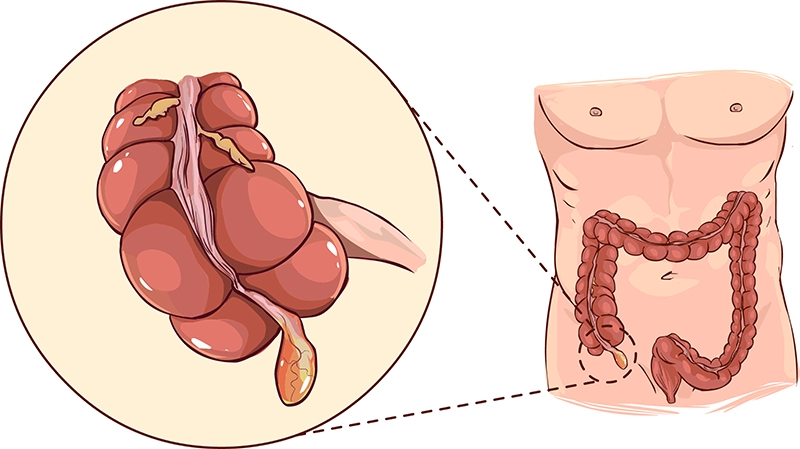
What Are the Types of Appendix Cancer?
Appendiceal tumours can include different pathological types, such as:
- Mucinous appendiceal neoplasms
- Appendiceal adenocarcinoma
- Goblet cell adenocarcinoma
- Neuroendocrine tumours
- Other less common appendiceal tumours
The pathology report helps the surgical oncologist understand the tumour and determine what additional evaluation or treatment may be required.
What Are the Symptoms of Appendiceal Cancer?
Appendiceal cancer does not always cause specific symptoms.
Possible Symptoms
- Abdominal pain or discomfort
- Abdominal swelling or fullness
- Changes in bowel habits
- Loss of appetite
- Nausea or digestive symptoms
- Unexplained weight changes
- Symptoms resembling appendicitis
Some patients may have no obvious symptoms and may only be diagnosed after an appendix operation or during investigation for another abdominal condition.
These symptoms can occur with many non-cancerous conditions, so they do not by themselves establish a diagnosis of appendix cancer.
How Is Appendiceal Cancer Diagnosed?
Diagnosis may involve several investigations depending on the patient's situation.
Tests and Evaluation May Include
- CT or other appropriate imaging
- Blood tests
- Colonoscopy in selected patients
- Surgical evaluation
- Histopathology
- Review of previous surgical specimens
- Additional pathology or molecular testing when appropriate
The pathology report is particularly important because different types of appendiceal tumours can behave differently and may require different treatment strategies.
What Is Pseudomyxoma Peritonei?
One condition associated with some mucin-producing appendiceal tumours is pseudomyxoma peritonei (PMP).
PMP occurs when mucin-producing tumour cells spread within the abdominal cavity and produce mucin. Instead of remaining confined to the appendix, disease may involve surfaces within the peritoneal cavity.
The extent and biological characteristics of PMP vary between patients.
Treatment therefore needs to be planned according to the pathology and the distribution of disease.
Can Appendix Cancer Spread to the Abdomen?
Yes. Some appendiceal cancers, particularly certain mucinous tumours, can spread within the peritoneal cavity.
When disease is present on the peritoneal surfaces, treatment may involve a specialized assessment by a surgical oncology team.
The Surgical Team May Evaluate
- Location of tumour deposits
- Amount of peritoneal disease
- Involvement of abdominal organs
- Whether complete or near-complete cytoreduction is possible
- Previous abdominal operations
- Previous chemotherapy or other treatments
- Overall health and fitness for major surgery
Appendiceal Cancer Treatment in Chennai
There is no single treatment that is appropriate for every patient with appendix cancer.
Depending on the tumour and stage, treatment may include:
Surgery
Surgery can be an important part of treatment for many appendiceal tumours.
The extent of surgery depends on the tumour type, tumour location, pathology, lymph node involvement and whether cancer has spread beyond the appendix.
Cytoreductive Surgery
When appendiceal cancer has spread to the peritoneal surfaces, selected patients may be considered for cytoreductive surgery (CRS).
The purpose of cytoreductive surgery is to remove visible tumour deposits that can be safely removed.
HIPEC for Appendiceal Cancer
HIPEC, or Hyperthermic Intraperitoneal Chemotherapy, is a specialized treatment that may be considered for selected patients with appendiceal cancer and peritoneal disease.
During CRS-HIPEC, visible tumour deposits are surgically removed as far as safely possible. Heated chemotherapy is then circulated within the abdominal cavity.
Is HIPEC Necessary for Every Appendix Cancer Patient?
No.
Having appendix cancer does not automatically mean that HIPEC is required.
Similarly, having pseudomyxoma peritonei does not mean that every patient will receive exactly the same treatment.
A specialist needs to review the pathology, scans and extent of disease before determining whether CRS-HIPEC is appropriate.
Individualized Treatment Planning
Treatment should be based on the individual patient's disease rather than simply on the diagnosis name.
What Is the Difference Between CRS and HIPEC?
CRS and HIPEC are related but different components of treatment.
Cytoreductive Surgery (CRS)
Cytoreductive surgery (CRS) focuses on surgically removing visible tumour deposits.
HIPEC
HIPEC involves delivering heated chemotherapy directly into the abdominal cavity after cytoreductive surgery in selected cases.
CRS-HIPEC
The combination is often referred to as CRS-HIPEC. The suitability of this approach depends on careful patient selection.
Can Appendiceal Cancer Be Treated With Robotic Surgery?
Robotic surgery is an option for selected cancers and surgical situations, but it is not automatically appropriate for every appendiceal cancer.
When disease is localized and the surgical anatomy is suitable, minimally invasive approaches may be considered.
However, extensive peritoneal disease requiring cytoreductive surgery is a different clinical situation and requires individualized assessment.
The surgical approach should be selected based on the cancer, anatomy, extent of disease and treatment objectives rather than choosing a technology simply because it is robotic.
How Do I Choose an Appendix Cancer Surgeon in Chennai?
Because appendiceal cancer is relatively uncommon, patients may benefit from consultation with a surgical oncologist experienced in gastrointestinal and peritoneal surface cancers.
Questions You Can Ask Your Surgeon
- What type of appendiceal tumour do I have?
- What does my pathology report mean?
- Has the cancer spread to the peritoneum?
- Do I have pseudomyxoma peritonei?
- Is surgery recommended?
- Is CRS-HIPEC appropriate in my case?
- What is the goal of the proposed surgery?
- What are the alternatives?
- What additional tests or scans are required?
- Should I obtain a second opinion?
Appendix Cancer Treatment at Kauvery Hospital, Chennai
Dr. Srikarthik Voleti is a Surgical Oncologist & Robotic Cancer Surgeon in Chennai and a Consultant in Surgical Oncology at Kauvery Hospital, Radial Road/Kovilambakkam.
His areas of expertise include robotic and minimally invasive cancer surgery, gastrointestinal cancers and cytoreductive surgery with HIPEC/PIPAC.
What to Bring for Your Consultation
- Biopsy or histopathology reports
- Previous operation notes
- CT/MRI/PET or other imaging when available
- Blood test results
- Previous chemotherapy or other cancer treatment
- Details of peritoneal disease
- Overall medical history
This information helps the surgical oncology team determine the appropriate next step.
When Should You Seek a Second Opinion for Appendix Cancer?
A second opinion can be useful when:
- The diagnosis is unusual or rare
- A major abdominal operation has been recommended
- HIPEC has been suggested
- There is disagreement about treatment options
- You want another review of your pathology
- You have already undergone surgery and need guidance about the next stage of treatment
For rare cancers, having the pathology and imaging reviewed by a specialist familiar with the disease can help clarify the available treatment options.
Frequently Asked Questions About Appendix Cancer Treatment
Click a question to view the answer.
Yes. Appendiceal cancers are relatively uncommon compared with several other gastrointestinal cancers.
No. Appendicitis is inflammation of the appendix, while appendiceal cancer involves a malignant or potentially malignant tumour. Some appendiceal tumours are discovered unexpectedly after an operation for suspected appendicitis.
Yes. Certain appendiceal cancers, particularly mucin-producing tumours, can spread within the peritoneal cavity.
Pseudomyxoma peritonei is a condition involving mucin accumulation within the abdominal cavity, often associated with mucin-producing appendiceal tumours.
HIPEC may be considered for selected appendiceal cancers, particularly some mucinous tumours with peritoneal disease. It is not required for every patient.
Yes. Cytoreductive surgery can be a major abdominal operation, and HIPEC may be performed as part of the same treatment strategy in selected patients.
Patients with appendiceal cancer can seek evaluation from a surgical oncology team experienced in gastrointestinal cancers, peritoneal surface malignancies and, when appropriate, CRS-HIPEC.
When searching for an appendix cancer surgeon near you, consider the surgeon's cancer-surgery training, experience with the specific disease, access to multidisciplinary cancer care and experience with complex abdominal or peritoneal surgery where relevant.
Book an Appendiceal Cancer Consultation in Chennai
If you or a family member has been diagnosed with appendiceal cancer, a mucinous appendiceal tumour or pseudomyxoma peritonei, specialist evaluation can help determine the appropriate treatment pathway.
Bring your pathology reports, scans, previous operation records and treatment details to your consultation.
Kauvery Hospital, Kovilambakkam, Chennai
Phone: +91 89391 02777