
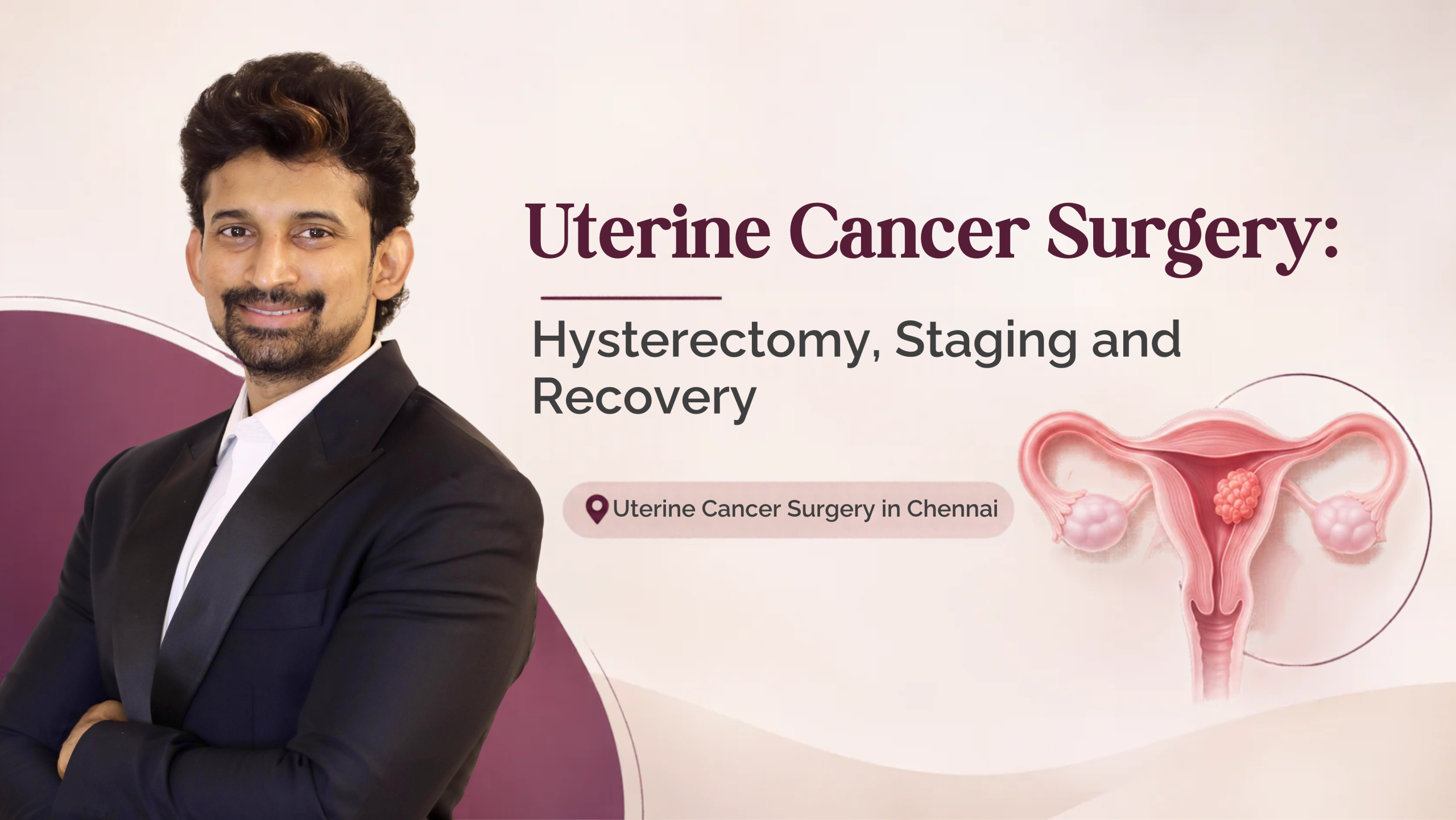
Uterine Cancer Surgery: Hysterectomy, Staging and Recovery in Chennai
Uterine Cancer Surgery: Hysterectomy, Staging and Recovery explains the surgical options, cancer staging procedures and recovery process for patients diagnosed with uterine or endometrial cancer. Dr. Srikarthik Voleti, Surgical Oncologist and Robotic Cancer Surgeon, provides cancer surgery evaluation and treatment planning at Kauvery Hospital, Chennai.
Understanding Uterine Cancer and Its Surgical Treatment
Uterine cancer develops in the uterus, the reproductive organ where pregnancy develops. Endometrial cancer, which begins in the inner lining of the uterus, is the most common type of uterine cancer. Treatment depends on the cancer type, grade, stage and the patient's overall health.
Uterine Cancer Surgery: Hysterectomy, Staging and Recovery is an important consideration for patients who have received a uterine cancer diagnosis and want to understand their treatment options.
Surgery is frequently a major component of treatment for endometrial cancer. Depending on the diagnosis, it may involve removing the uterus, cervix, fallopian tubes, ovaries and selected lymph nodes.
- Remove the cancerous uterus and indicated surrounding tissues.
- Evaluate possible cancer spread to lymph nodes.
- Establish the pathological stage of the disease.
- Help determine whether additional cancer treatment is required.
Types of Uterine Cancer
Identifying the type of uterine cancer is essential before planning uterine cancer surgery in Chennai. Different tumours can behave differently and require individual treatment approaches.
Endometrial Cancer
Endometrial cancer develops in the inner lining of the uterus. It is the most common type of uterine cancer and is frequently treated surgically when appropriate.
Uterine Sarcoma
Uterine sarcoma is an uncommon cancer arising from the muscular or supporting tissues of the uterus. Treatment depends on the specific tumour type and disease extent.
Diagnosis Before Uterine Cancer Surgery
A detailed evaluation helps determine the diagnosis, extent of disease and appropriate surgical plan.
Pelvic Examination
A clinical examination helps assess the reproductive organs and identify findings that may require further investigations.
Transvaginal Ultrasound
Ultrasound can assess the uterus and endometrial lining and help identify abnormalities that need additional evaluation.
Endometrial Biopsy
A tissue sample from the uterine lining is examined in a laboratory to identify cancer cells and relevant tumour characteristics.
MRI and CT Scans
Imaging investigations may help evaluate the uterus, surrounding structures, lymph nodes and other areas depending on the clinical situation.
Histopathology Assessment
The biopsy findings, imaging and clinical assessment are considered together when planning treatment.
Hysterectomy for Uterine Cancer: What Does It Involve?
Hysterectomy is the surgical removal of the uterus. It is an important treatment for many patients with endometrial cancer. The extent of surgery depends on the cancer type, stage and individual clinical requirements.
Total Hysterectomy
Total hysterectomy involves removing the uterus and cervix. It is commonly performed as part of surgical treatment for endometrial cancer.
Hysterectomy with Bilateral Salpingo-Oophorectomy
This procedure involves removing the uterus, both fallopian tubes and ovaries when clinically indicated. The decision depends on the patient's age, menopausal status, tumour characteristics and treatment requirements.
Radical Hysterectomy
Radical hysterectomy involves removing the uterus, cervix and additional surrounding tissues. It is not necessary for every uterine cancer patient and is selected according to the specific diagnosis.
Lymph Node Assessment
Lymph nodes may be evaluated using sentinel lymph node mapping or other appropriate staging procedures. This helps determine whether cancer has spread beyond the uterus.
Individualised Cancer Surgery Planning
Every patient does not require the same hysterectomy or lymph node procedure. The surgical approach is selected after reviewing the pathology, imaging and overall health.
Uterine Cancer Staging: Why Is It Important?
Cancer staging describes how far the disease has developed and whether it has spread beyond its original location. Surgical staging provides important information for planning further cancer treatment.
What Happens During Surgical Staging?
- Examination of the uterus and surrounding pelvic structures.
- Removal of the uterus and other indicated tissues.
- Assessment of pelvic and para-aortic lymph nodes.
- Inspection of the abdominal and pelvic cavity.
- Collection of samples from suspicious areas when indicated.
- Pathological examination of removed tissues.
Stages of Endometrial Cancer
| Stage | General Description |
|---|---|
| Stage I | Cancer is confined to the uterine body. |
| Stage II | Cancer involves the cervical stroma but has not extended beyond the uterus. |
| Stage III | Cancer has spread to nearby pelvic structures, tissues or regional lymph nodes. |
| Stage IV | Cancer has invaded the bladder or bowel mucosa or spread to distant organs, depending on staging criteria. |
The final stage is determined using the applicable staging classification and pathological findings. Tumour grade, histological type and molecular characteristics can also influence treatment decisions.
Different Surgical Approaches for Uterine Cancer Surgery in Chennai
Uterine cancer surgery may be performed using different techniques. The most appropriate approach depends on tumour characteristics, disease extent, the patient's health and the surgeon's assessment.
Open Abdominal Surgery
Open surgery uses an abdominal incision to access the pelvic organs. It may be selected when the disease or surgical complexity requires this approach.
Laparoscopic Surgery
Laparoscopic surgery uses small incisions and camera-assisted instruments. It may be suitable for selected uterine cancer operations.
Robotic-Assisted Surgery
Robotic surgery uses specialised instruments controlled by the surgeon through a console. It may be considered for selected gynecologic cancer procedures.
Vaginal Surgical Approach
Vaginal hysterectomy involves removing the uterus through the vagina. Its role in cancer surgery depends on staging requirements and clinical circumstances.
How Is the Surgical Approach Selected?
- Type and stage of uterine cancer.
- Tumour size and location.
- Involvement of surrounding organs.
- Previous abdominal or pelvic surgery.
- Overall health and anaesthesia suitability.
- Need for lymph node assessment.
Robotic Uterine Cancer Surgery in Chennai
Robotic-assisted surgery is a minimally invasive surgical technique used in selected cancer operations. The surgeon controls specialised instruments from a console, using magnified visualisation and precise instrument movements.
For appropriately selected patients, robotic-assisted hysterectomy may be considered as part of uterine cancer treatment.
Potential Benefits of Robotic Surgery
- Small surgical access incisions.
- Magnified three-dimensional visualisation.
- Flexible instrument movements.
- Potentially reduced blood loss in selected procedures.
- Potentially shorter recovery compared with certain open operations.
Is Robotic Surgery Suitable for Every Patient?
No. Robotic surgery is not automatically the best option for every patient. Suitability depends on cancer stage, tumour characteristics, anatomy, previous treatment and the operation required.
Explore robotic cancer surgery and surgical oncology services in Chennai.
How to Prepare for Uterine Cancer Surgery
Preoperative preparation helps the medical team assess health and plan the operation.
Medical Assessment
The surgical and anaesthesia teams review medical history, medications, previous operations and existing health conditions.
Diagnostic Reports
Patients may be asked to bring biopsy reports, imaging scans, blood investigations and previous treatment records.
Medication Review
Inform the medical team about prescribed medications, supplements and allergies. Certain medicines may require adjustment under medical supervision.
Preoperative Instructions
Instructions regarding fasting, medication, admission and surgical preparation are provided by the hospital team.
Recovery After Uterine Cancer Surgery
Recovery depends on the surgical approach, extent of the operation, lymph node procedures and the patient's general health.
Recovery After Open Surgery
Open abdominal hysterectomy usually requires a longer recovery because of the larger incision. Hospital stay and return to everyday activities vary between patients.
Recovery After Laparoscopic or Robotic Surgery
Minimally invasive procedures may involve smaller incisions and shorter hospital stays compared with certain open procedures. Recovery still varies between individuals.
General Recovery Timeline
| Period | Expected Recovery |
|---|---|
| First few days | Hospital monitoring, pain management and gradual movement. |
| First 1–2 weeks | Wound healing, follow-up instructions and gradual activity. |
| Weeks 3–4 | Progressive improvement in energy and mobility. |
| Weeks 4–6 and beyond | Gradual return to regular activities as advised by the surgeon. |
Important Aspects of Postoperative Care
- Follow prescribed medication instructions.
- Keep surgical wounds clean as instructed.
- Begin gentle movement as advised.
- Avoid heavy lifting until cleared by the surgeon.
- Maintain adequate nutrition and hydration.
- Attend postoperative appointments.
Emotional and Physical Well-Being
Recovery may also involve fatigue, emotional stress and hormonal changes, particularly when the ovaries are removed. Appropriate medical guidance and support can help patients manage these changes.
What Happens After Uterine Cancer Surgery?
After surgery, the removed tissues are examined by a pathologist. The final report provides information about tumour characteristics and the extent of disease.
Final Histopathology Report
The report may include tumour type, grade, depth of invasion, cervical involvement, lymphovascular space invasion, margins and lymph node findings when applicable.
Is Chemotherapy or Radiation Therapy Needed?
Not every patient needs additional treatment. Depending on the pathology and risk category, further treatment may include:
- Chemotherapy: Medicines used to destroy cancer cells or control their growth.
- Radiation therapy: High-energy radiation used to target cancer cells.
- Vaginal brachytherapy: Internal radiation treatment for selected patients.
- Hormone therapy: Considered for certain tumour types and clinical situations.
- Immunotherapy or targeted therapy: Considered in selected cases based on tumour biomarkers and treatment guidelines.
Long-Term Follow-Up
Follow-up appointments help monitor recovery, review pathology findings and assess treatment response. The schedule depends on the cancer type, stage and treatment plan.
Choosing a Surgical Oncologist for Uterine Cancer Surgery in Chennai
Choosing an experienced surgical oncologist is an important part of treatment planning. Patients should understand the diagnosis, available surgical approaches, staging requirements and possible additional treatments.
A surgical oncology consultation helps determine whether open, laparoscopic or robotic surgery is appropriate for the individual patient.
Patients searching for uterine cancer surgery in Chennai, endometrial cancer surgery, robotic hysterectomy or a surgical oncologist near me should seek an evaluation based on their clinical requirements.
Dr. Srikarthik Voleti – Surgical Oncologist & Robotic Cancer Surgeon in Chennai
Dr. Srikarthik Voleti is a Surgical Oncologist and Robotic Cancer Surgeon associated with Kauvery Hospital, Chennai. His qualifications include:
- MBBS
- MS – General Surgery
- MCh – Surgical Oncology
- MRCS (Edin)
Advanced Training
His professional training includes exposure to surgical oncology and minimally invasive and robotic cancer surgery at recognised institutions, including Tata Memorial Centre, Aster International Institute of Oncology and NYU Langone Health.
His surgical oncology practice includes robotic cancer surgery, minimally invasive cancer surgery and the surgical management of different cancer types.
Patients seeking uterine or endometrial cancer evaluation can discuss hysterectomy, surgical staging and suitable treatment approaches during a consultation.
Consultation location: Kauvery Hospital, Chennai, Tamil Nadu.
Google Business Profile:
Dr. Srikarthik Voleti – Surgical Oncologist & Robotic Cancer Surgeon | Kauvery Hospital Chennai
Explore Other Cancer Treatment Services
Explore other cancer surgery and treatment information through the official website.
Frequently Asked Questions About Uterine Cancer Surgery
1. What is uterine cancer surgery?
Uterine cancer surgery is an operation to remove cancer affecting the uterus. It commonly involves hysterectomy and may include removal of the fallopian tubes, ovaries and selected lymph nodes depending on the diagnosis.
2. Is hysterectomy necessary for uterine cancer?
Hysterectomy is a standard treatment for many patients with endometrial cancer. The treatment decision depends on cancer type, stage, tumour characteristics and individual medical circumstances.
3. How long does uterine cancer surgery take?
The duration depends on the surgical technique, hysterectomy type, staging procedures and complexity of the operation. The surgeon can provide an estimate after reviewing the treatment plan.
4. What is the recovery time after uterine cancer surgery?
Recovery varies according to the surgical approach and health of the patient. Open surgery may require approximately four to six weeks for recovery, while selected minimally invasive procedures may involve shorter recovery periods.
5. Is robotic surgery available for uterine cancer?
Robotic-assisted surgery can be considered for selected uterine cancer procedures. Suitability depends on tumour characteristics, stage, anatomy and treatment requirements.
6. Are ovaries always removed during hysterectomy for uterine cancer?
No. Although removal of both ovaries and fallopian tubes is commonly included in many endometrial cancer operations, the decision depends on age, menopausal status, cancer risk and clinical circumstances.
7. Is chemotherapy required after uterine cancer surgery?
Not every patient requires chemotherapy. Additional treatment is determined by the final pathology, stage, tumour type and individual risk assessment.
8. How is uterine cancer staged after surgery?
Surgical staging involves examining removed tissues and sampled lymph nodes. Pathological findings, imaging and clinical information help determine the final stage.
9. Can uterine cancer be treated with laparoscopic surgery?
Selected patients may undergo laparoscopic hysterectomy and staging procedures. Suitability depends on the tumour, disease extent and surgeon's assessment.
10. Where can I consult a surgical oncologist for uterine cancer surgery in Chennai?
Patients can seek a surgical oncology consultation with Dr. Srikarthik Voleti at Kauvery Hospital, Chennai, for uterine and endometrial cancer evaluation and treatment planning.
Book a Consultation for Uterine Cancer Surgery in Chennai
Submit your details to request an appointment with Dr. Srikarthik Voleti at Kauvery Hospital, Chennai.
Visit Kauvery Hospital, Chennai
Dr. Srikarthik Voleti
Surgical Oncologist & Robotic Cancer Surgeon
Kauvery Hospital
2/473, 200 Feet Radial Road, Ganapathy Nagar, Kovilambakkam, Chennai, Tamil Nadu – 600129.
Conclusion
Uterine Cancer Surgery: Hysterectomy, Staging and Recovery involves several stages, from confirming the diagnosis and selecting an appropriate surgical approach to reviewing pathology and planning postoperative care.
Hysterectomy, lymph node assessment and minimally invasive or robotic surgical techniques may be considered according to individual cancer characteristics and overall health.
For uterine cancer surgery in Chennai, Dr. Srikarthik Voleti at Kauvery Hospital provides surgical oncology evaluation and treatment planning for patients requiring specialised cancer surgery.