
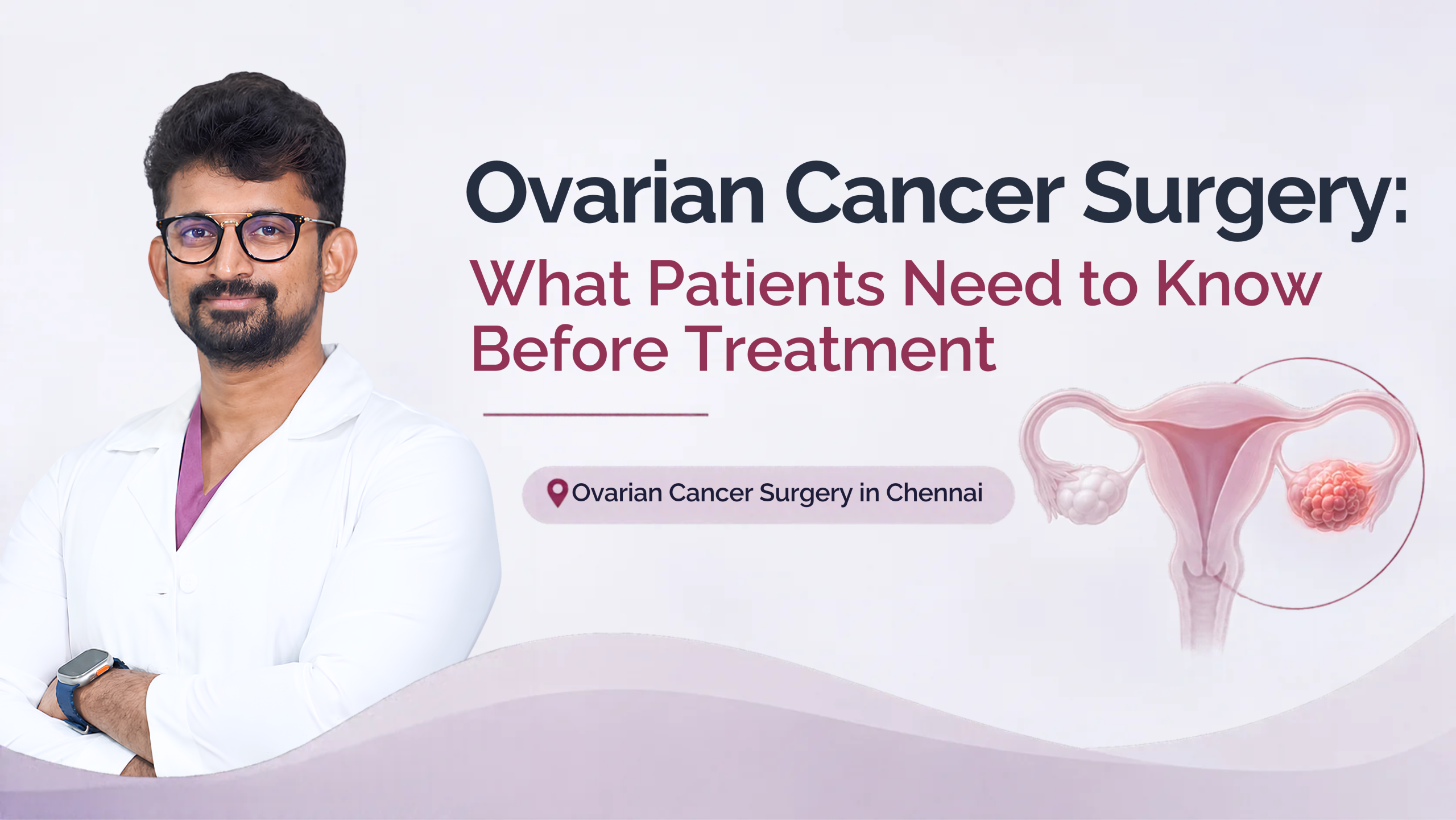
Understanding Ovarian Cancer Surgery in Chennai
Ovarian Cancer Surgery: What Patients Need to Know Before Treatment - Ovarian Cancer Surgery in Chennai is an important topic for women and families seeking to understand the available treatment options following an ovarian cancer diagnosis. The appropriate treatment depends on the cancer type, stage, tumour characteristics, spread of disease and the patient's overall health.
Ovarian cancer develops when abnormal cells in or around the ovaries grow uncontrollably. Some ovarian tumours are benign, while others are borderline or malignant. An accurate diagnosis and appropriate staging help determine whether surgery, chemotherapy or a combination of treatments is required.
For patients searching for an ovarian cancer specialist, cancer doctor in Chennai or surgical oncologist near me, understanding the role of a surgical oncologist is an important first step. Dr. Srikarthik Voleti provides surgical oncology care at Kauvery Hospital, Radial Road, Chennai, with expertise in gynaecological cancer surgery, robotic surgery and complex cancer procedures.
In This Article
What Is Ovarian Cancer?
Ovarian cancer refers to malignant growth that originates in the ovaries. The ovaries are reproductive organs located on either side of the uterus and are responsible for producing eggs and certain hormones.
Ovarian cancer can develop from different cell types, and the type of tumour plays an important role in selecting the appropriate treatment. Epithelial ovarian cancer is one of the common categories, while other forms include germ cell and sex cord-stromal tumours.
Common Types of Ovarian Cancer
- Epithelial ovarian cancer: Develops from cells covering the outer surface of the ovary or related tissues.
- High-grade serous ovarian cancer: A common and often aggressive epithelial ovarian cancer subtype.
- Endometrioid ovarian cancer: A type of epithelial ovarian malignancy.
- Clear cell ovarian cancer: A distinct epithelial ovarian cancer subtype.
- Mucinous ovarian cancer: A less common type associated with mucus-producing tumour cells.
How Is Ovarian Cancer Diagnosed?
Diagnosis generally involves a combination of clinical assessment, imaging, blood investigations and tissue examination. The exact investigations depend on the patient's presentation and medical history.
Investigations That May Be Recommended
- Pelvic and abdominal ultrasound.
- CT or MRI scans when clinically indicated.
- CA-125 and other tumour markers where appropriate.
- Histopathological examination of tissue.
- Additional investigations based on the suspected cancer type.
Why Is Ovarian Cancer Surgery Important?
Ovarian cancer surgery can serve different purposes depending on the diagnosis and treatment plan. It may help establish the extent of cancer, remove the primary tumour, assess the spread of disease and reduce the amount of visible cancer within the abdomen.
The objective of surgery: The surgical approach is selected according to the tumour type, stage, distribution of disease and the possibility of safely removing the cancer. Not every patient requires the same operation.
Major Objectives of Ovarian Cancer Surgery
Accurate Staging
Determine the extent of the disease and evaluate whether cancer has spread beyond the ovaries.
Tumour Removal
Remove the primary ovarian tumour and other affected tissues when clinically appropriate.
Disease Reduction
Reduce visible cancer deposits through cytoreductive or debulking surgery in selected patients.
Treatment Planning
Obtain surgical and pathological information to guide further cancer treatment.
Types of Ovarian Cancer Surgery
The type of ovarian cancer surgery recommended depends on the stage of cancer, tumour location, involvement of surrounding organs, patient age, reproductive goals and overall medical condition.
1. Oophorectomy
Oophorectomy refers to the surgical removal of one or both ovaries. The decision to remove an ovary or both ovaries depends on the tumour characteristics, cancer stage and the planned extent of surgery.
2. Salpingo-Oophorectomy
Salpingo-oophorectomy involves removing an ovary along with its associated fallopian tube. In selected ovarian cancer operations, removal of both ovaries and fallopian tubes may be recommended.
3. Hysterectomy
A hysterectomy involves removing the uterus. It may form part of an ovarian cancer operation depending on the extent of the disease and the surgical treatment plan.
4. Ovarian Cancer Staging Surgery
Surgical staging helps determine the extent of ovarian cancer. Depending on the individual case, it may involve examining the abdominal and pelvic cavity, collecting tissue samples, evaluating lymph nodes and assessing the peritoneal surfaces.
5. Cytoreductive or Debulking Surgery
Cytoreductive surgery, also called debulking surgery, aims to remove as much visible cancer as safely possible. It is an important approach in selected patients with advanced ovarian cancer.
6. Fertility-Sparing Surgery
For carefully selected patients with certain early-stage ovarian tumours, fertility-sparing surgery may be considered. This approach aims to preserve reproductive potential while maintaining appropriate cancer treatment principles. Suitability depends on the tumour type, stage and other clinical findings.
Cytoreductive Surgery for Advanced Ovarian Cancer
Advanced ovarian cancer can involve multiple areas within the abdomen and pelvis. In selected patients, cytoreductive surgery is performed to remove visible tumour deposits and reduce the overall disease burden.
The extent of surgery varies depending on where the cancer has spread. Surgical planning may involve assessment of the ovaries, uterus, fallopian tubes, peritoneum, lymph nodes and other affected abdominal structures.
What Happens During Debulking Surgery?
- Assessment of the abdominal and pelvic cavity.
- Removal of the primary ovarian tumour when appropriate.
- Removal of visible tumour deposits.
- Evaluation and management of affected surrounding structures.
- Assessment of the remaining disease after surgery.
What Is HIPEC?
HIPEC stands for Hyperthermic Intraperitoneal Chemotherapy. It involves delivering heated chemotherapy into the abdominal cavity during a specific surgical procedure. It is used in selected peritoneal surface malignancies and is not routinely suitable for every patient with ovarian cancer.
The potential role of cytoreductive surgery with HIPEC depends on cancer type, disease stage, previous treatment, surgical feasibility and the patient's overall condition.
How Is HIPEC Different From Conventional Chemotherapy?
Conventional chemotherapy is generally administered through systemic routes, allowing medication to circulate throughout the body. HIPEC involves the delivery of heated chemotherapy directly into the abdominal cavity during surgery. Both approaches have different indications and treatment considerations.
Read more about HIPEC treatment in Chennai and cytoreductive surgery in Chennai.
Is Robotic Ovarian Cancer Surgery an Option?
Robotic surgery is an advanced minimally invasive surgical approach in which the surgeon controls robotic instruments through a specialised surgical system. It provides a magnified, high-definition view of the operating area and allows controlled instrument movements.
For selected patients with ovarian and other gynaecological cancers, minimally invasive or robotic surgery may be considered. However, it is not appropriate for every ovarian cancer case, particularly when extensive disease requires a different surgical approach.
Potential Features of Robotic Cancer Surgery
Enhanced Visualisation
Magnified surgical views help the surgeon assess delicate anatomical structures.
Instrument Precision
Robotic instruments allow controlled movements during appropriately selected procedures.
Minimally Invasive Access
Selected procedures can be performed through small surgical incisions.
Individualised Approach
The choice of robotic or open surgery depends on the cancer and the patient's treatment requirements.
Robotic surgery does not operate independently. The surgeon controls the instruments throughout the procedure. The suitability of robotic surgery must be determined after evaluating the patient's diagnosis and disease extent.
Explore robotic gynaecological cancer surgery in Chennai and robotic cancer surgery.
How Should Patients Prepare for Ovarian Cancer Surgery?
Preparation for ovarian cancer surgery involves reviewing the diagnosis, understanding the proposed procedure and assessing the patient's overall fitness for surgery.
1. Review Previous Medical Reports
Patients should bring relevant ultrasound, CT, MRI, PET-CT, biopsy and blood investigation reports. Previous treatment records and medication details may also be required.
2. Understand the Surgical Plan
Discuss the purpose of the proposed operation, which organs or tissues may need removal, the expected hospital stay and the anticipated recovery process.
3. Complete Preoperative Assessment
The medical team may recommend blood tests, cardiac assessment, anaesthesia evaluation and other investigations based on the patient's health and planned procedure.
4. Discuss Medications and Medical History
Inform the treating team about existing medical conditions, allergies, previous surgeries, ongoing medications and any previous cancer treatments.
5. Understand the Recovery Plan
Patients should discuss postoperative care, nutrition, activity restrictions, pain management and follow-up arrangements before undergoing surgery.
Recovery After Ovarian Cancer Surgery
Recovery after ovarian cancer surgery varies depending on the type of operation, surgical approach, extent of disease, general health and whether additional treatment is required.
What Happens Immediately After Surgery?
Following surgery, patients are monitored by the medical team. The healthcare team assesses pain, vital signs, wound healing, mobility, nutrition and the return of normal bodily functions.
Hospital Stay
The duration of hospitalisation depends on the complexity of the operation and the patient's recovery. Patients undergoing extensive abdominal surgery may require a longer hospital stay than those having selected minimally invasive procedures.
Returning to Daily Activities
Gradual movement, appropriate nutrition, adequate rest and adherence to medical advice form important parts of postoperative recovery. The treating surgeon will provide instructions regarding physical activity and the timing of follow-up visits.
Follow-Up After Surgery
Follow-up appointments may involve reviewing the surgical findings, pathology reports, recovery progress and the need for additional treatment. The follow-up schedule is individualised according to the diagnosis and treatment plan.
Does Ovarian Cancer Treatment Include Chemotherapy?
Yes. Chemotherapy may form part of the treatment plan for many ovarian cancer patients. Whether it is required before or after surgery depends on the cancer type, stage, surgical findings and overall treatment strategy.
Neoadjuvant Chemotherapy
Neoadjuvant chemotherapy refers to chemotherapy administered before surgery. It may be considered for selected patients when initial surgery is not considered the most appropriate first step.
Adjuvant Chemotherapy
Adjuvant chemotherapy is administered after surgery when recommended to address microscopic cancer cells or reduce the risk of recurrence, depending on the diagnosis.
Multidisciplinary Cancer Treatment
Ovarian cancer treatment may involve surgical oncologists, medical oncologists, radiologists, pathologists and other healthcare professionals. Their combined input helps determine an appropriate treatment pathway.
Individualised treatment planning: Surgery and chemotherapy are not interchangeable options. The sequence and combination of treatments should be based on the confirmed diagnosis and specialist assessment.
Factors That Influence Ovarian Cancer Surgery Decisions
There is no single surgical procedure suitable for every ovarian cancer patient. The treating surgical oncologist evaluates multiple factors before recommending an operation.
Cancer Stage
The extent of cancer spread helps determine the required surgical approach.
Tumour Type
Histological findings influence the type of treatment recommended.
Overall Health
General medical condition and fitness for surgery are important considerations.
Treatment History
Previous surgery or chemotherapy may influence further treatment decisions.
Disease Distribution
The location and extent of abdominal or pelvic involvement guide surgical planning.
Patient Preferences
Reproductive goals and individual treatment preferences may influence selected surgical decisions.
Choosing an Ovarian Cancer Surgeon in Chennai
Selecting an appropriate surgical oncologist is an important part of ovarian cancer treatment. Patients searching for an ovarian cancer surgeon near me, surgical oncologist in Chennai, best cancer specialist in Chennai or cancer doctor in Chennai should consider the specialist's qualifications, surgical training and experience in managing the relevant cancer type.
What Should Patients Consider?
- Specialist qualifications in surgical oncology.
- Experience in gynaecological cancer surgery.
- Training in minimally invasive and robotic cancer surgery.
- Expertise in complex cancer procedures where relevant.
- Availability of multidisciplinary cancer care.
- Clear communication about the diagnosis and available treatment options.
Dr. Srikarthik Voleti
Consultant Surgical Oncologist & Robotic Cancer Surgeon
Dr. Srikarthik Voleti is a surgical oncologist with specialised training in robotic and minimally invasive surgical oncology. His areas of professional expertise include gynaecological cancers, ovarian cancer surgery, breast cancer surgery, gastrointestinal cancer surgery, thoracic oncology and complex cancer procedures.
He has received training at Tata Memorial Centre, Aster International Institute of Oncology and NYU Langone Health. His professional profile also includes fellowship training in robotic and minimal access surgical oncology.
Dr. Srikarthik Voleti is listed as a Consultant in Surgical Oncology at Kauvery Hospital, Radial Road, Chennai. His approach involves evaluating each patient's diagnosis and discussing suitable surgical treatment options based on individual clinical circumstances.
View Kauvery Hospital Doctor Profile View Google Business ProfileExplore Other Cancer Treatment Services
Explore the surgical oncology and cancer treatment services offered by Dr. Srikarthik Voleti through the official website.